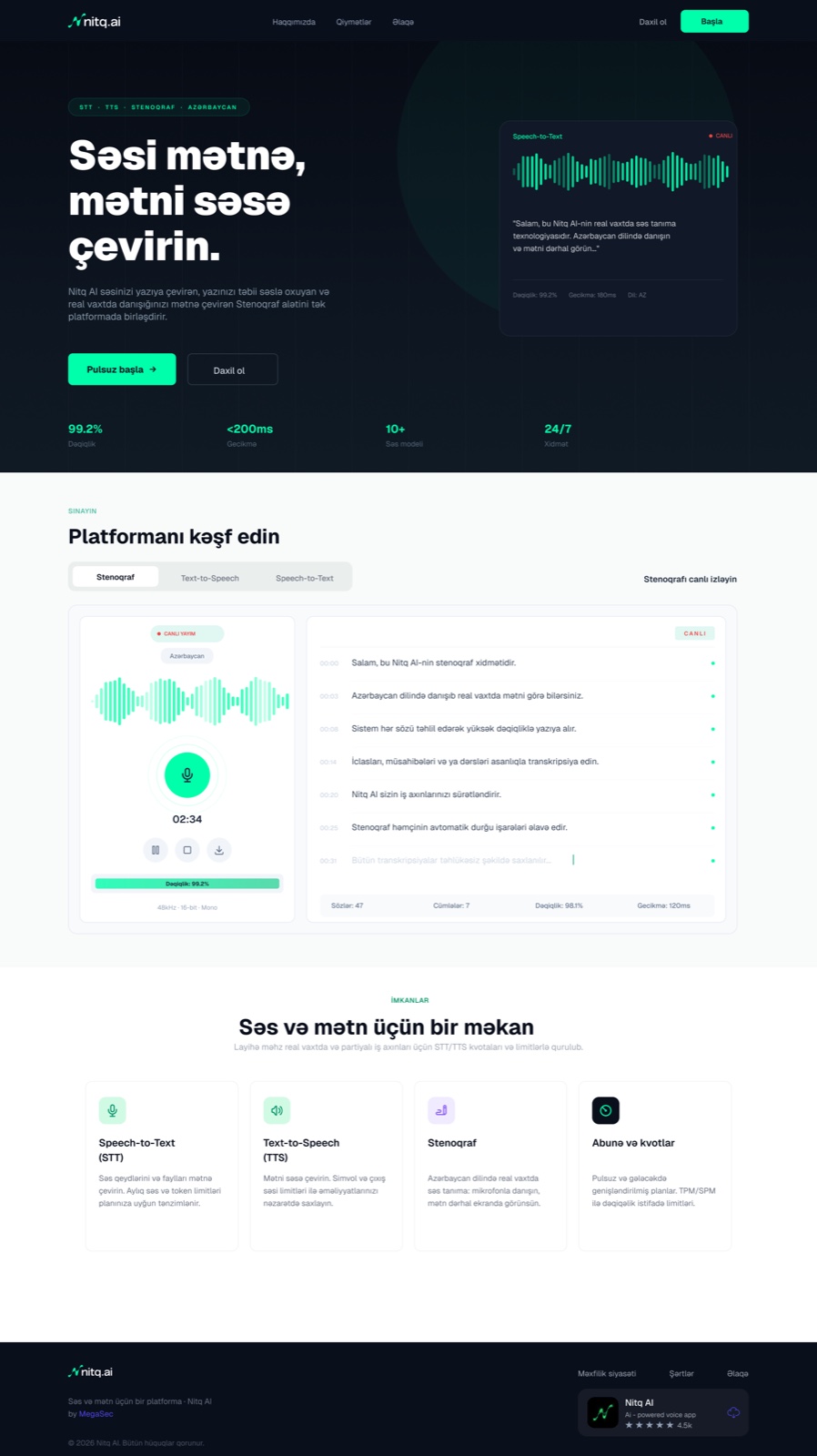
Homepage
Homepage
A working transcription field opens the page. Platform discovery and capability cards follow — every model is one scroll away from the headline.
Two AI models — speech-to-text and text-to-speech — on a single product surface. Designed so journalists, content teams, and developers can try the models within seconds of arriving on the site.

Azerbaijani had limited production-grade tooling for speech-to-text or text-to-speech. International tools mishandled the alphabet and required reading documentation before trying anything. Nitq.ai launched two models on one product surface, with a working demo as the primary entry point on the homepage.
Every model opens with a working demo. Marketing copy sits below.
A working transcription field opens the page. Platform discovery and capability cards follow — every model is one scroll away from the headline.
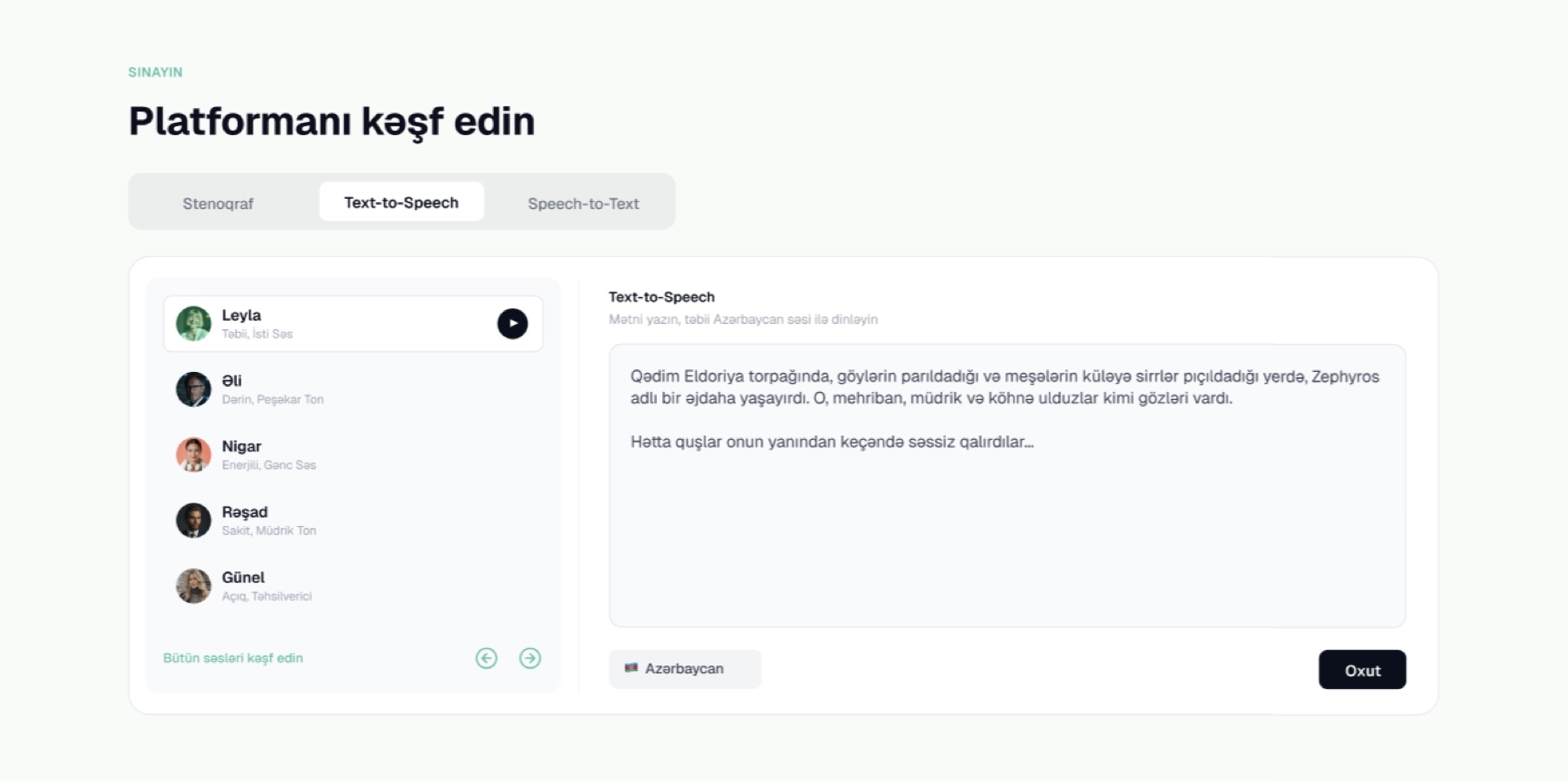
Pick a voice, type Azerbaijani text, hear it back. Five distinct voices, in-browser playback.
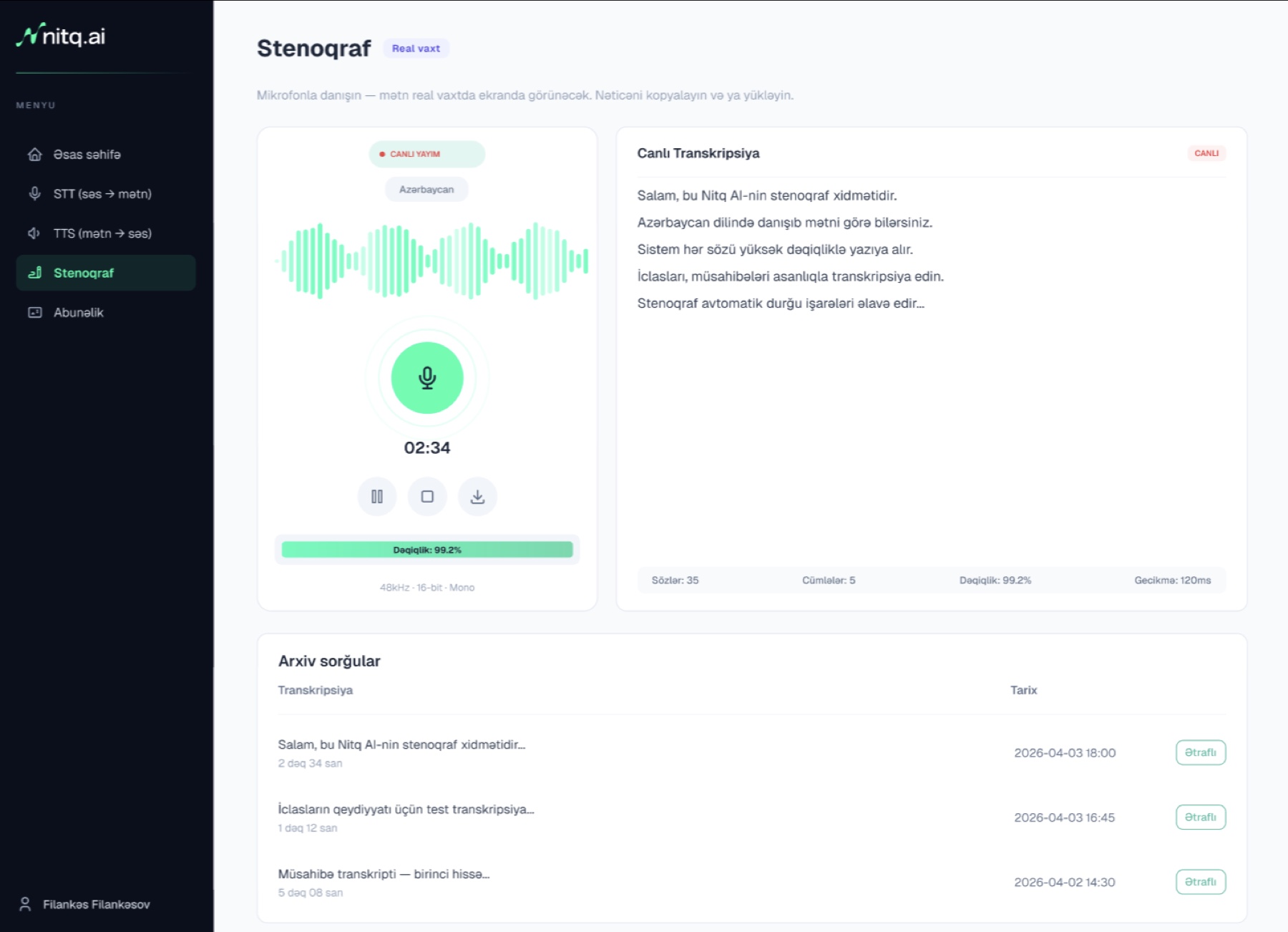
Speak into the mic; the transcript builds word by word, with accuracy and latency reported live.
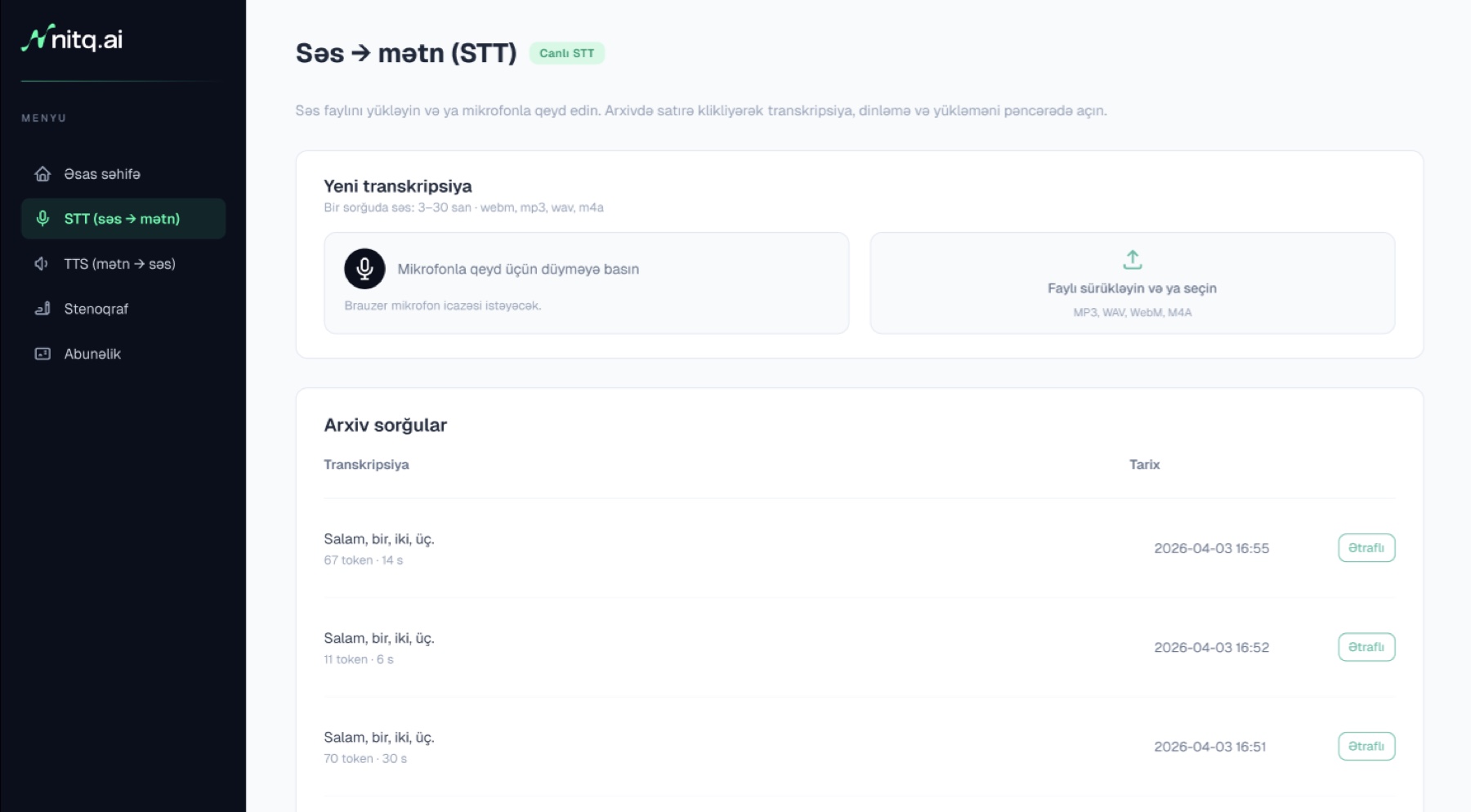
An authenticated dashboard for jobs and archive — upload audio or capture from the mic, return to results when ready.
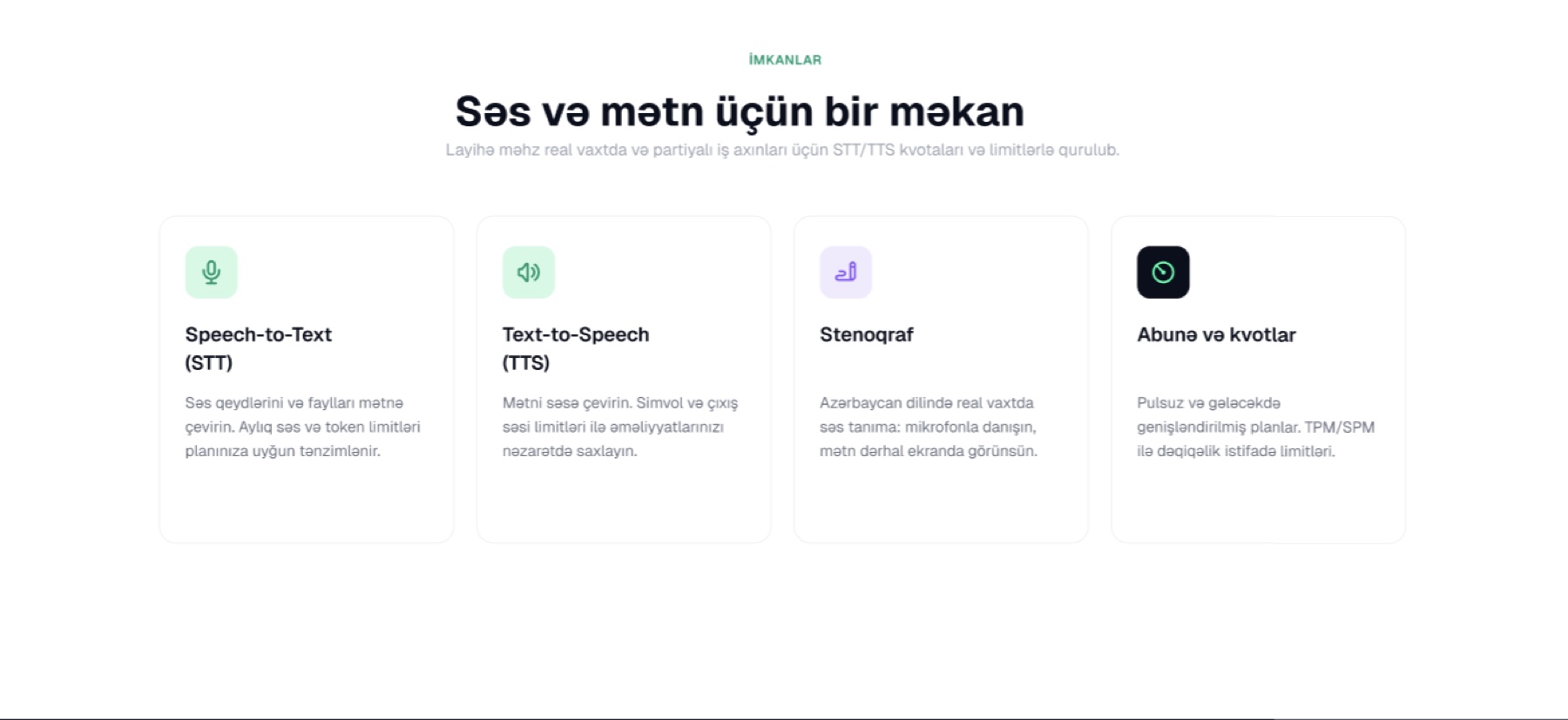
Speech-to-text, text-to-speech, real-time stenograph, and quotas — described in plain Azerbaijani, on a shared component set.
Azerbaijani by default — alphabet, the i / İ rule, casing and validation handled at the system layer, across every viewport.
Both models open with a working demo. Marketing copy sits below it.
The alphabet, the i and İ rule, casing, and validation behave correctly by default.
Speech-to-text and text-to-speech share a single header, footer, and component set.
Nine interviews with journalists, content teams, and developers.
Seven international voice AI products evaluated on the same test set.
Try then read, locale at the system layer, one product surface, and perceived speed first.
Built the hero as a working transcription field, tested with five users before any visual design.
Live demo, streaming transcript, real-time waveform. A small design system was handed over for the team to extend.